
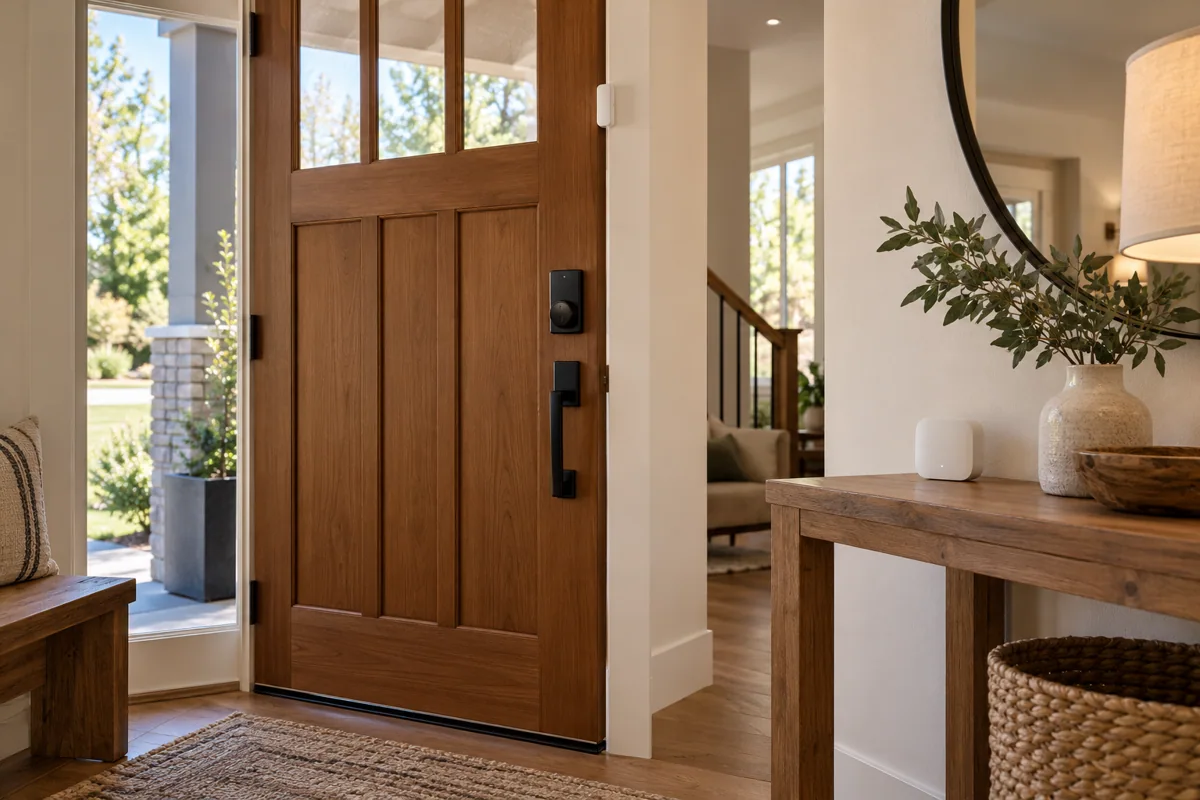
Choose your equipment
Buying a Smart Lock? Measure the Door Before Choosing the App
A lock that fits your phone but not your door is an expensive detour. Start with the deadbolt opening, then choose how the household will enter.
Read the guide →Short answers to real buying questions, with equipment choices, room combinations and practical routes to a project or partnership.
300 guides
A lock that fits your phone but not your door is an expensive detour. Start with the deadbolt opening, then choose how the household will enter.
Read the guide →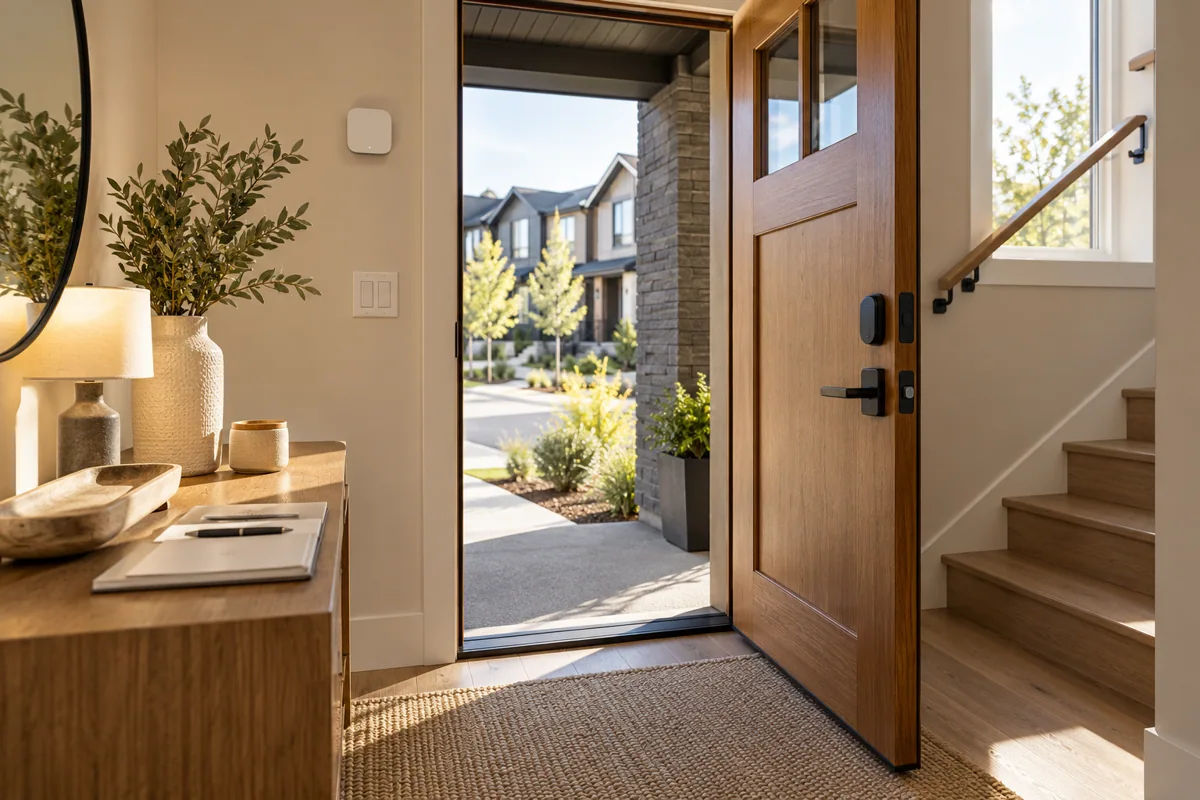
A full replacement gives you a coordinated entry set; an interior retrofit can preserve a door appearance you already like. The existing lock mechanism decides whether retrofit is sensible.
Read the guide →Home Key is a useful shortcut when the family already uses compatible Apple devices. It should sit beside a workable guest-entry plan, rather than become the only reason to buy.
Read the guide →If several people need occasional access, compare credential management before comparing finishes. Adding a visitor should be straightforward; removing that access should be just as clear.
Read the guide →Compare the whole communication path, not the number of boxes. A direct Wi-Fi lock and a hub-based setup can both suit a home, depending on coverage and the automations you want.
Read the guide →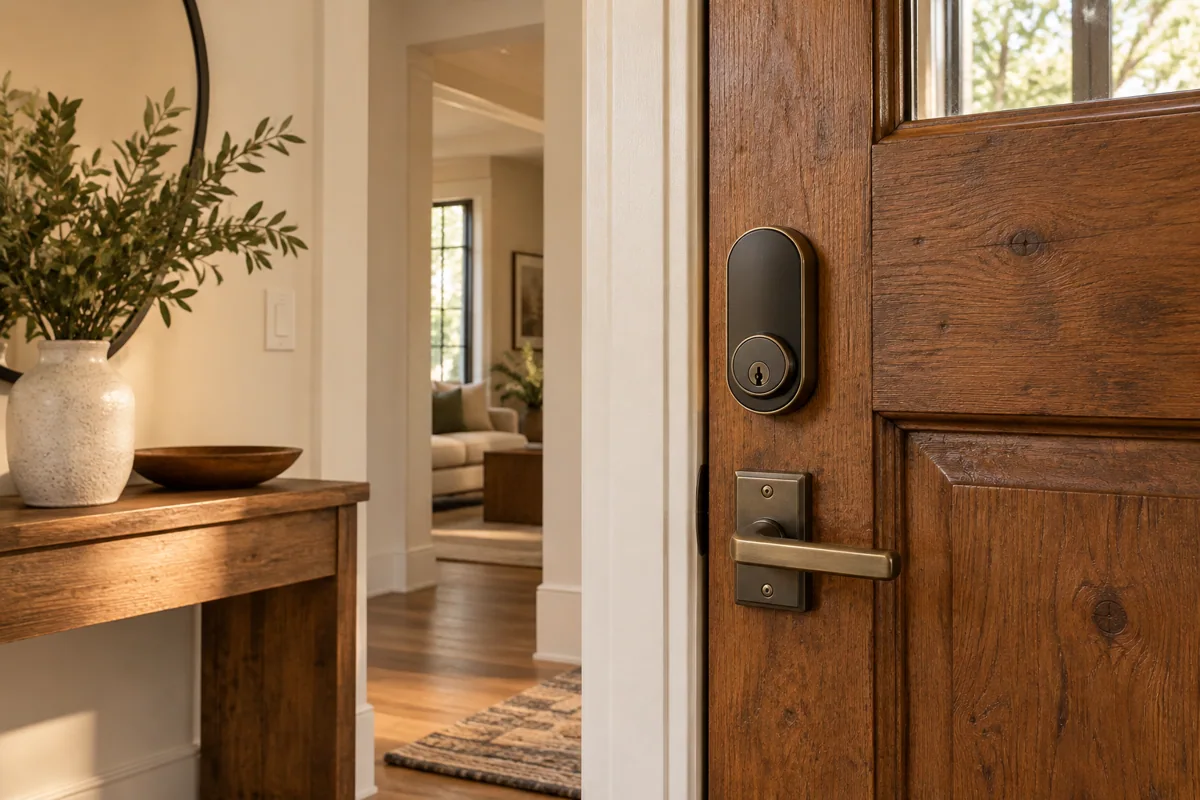
Fingerprint entry is attractive because it removes one small daily task. The better purchase also leaves every resident comfortable with an alternative when a finger cannot be read.
Read the guide →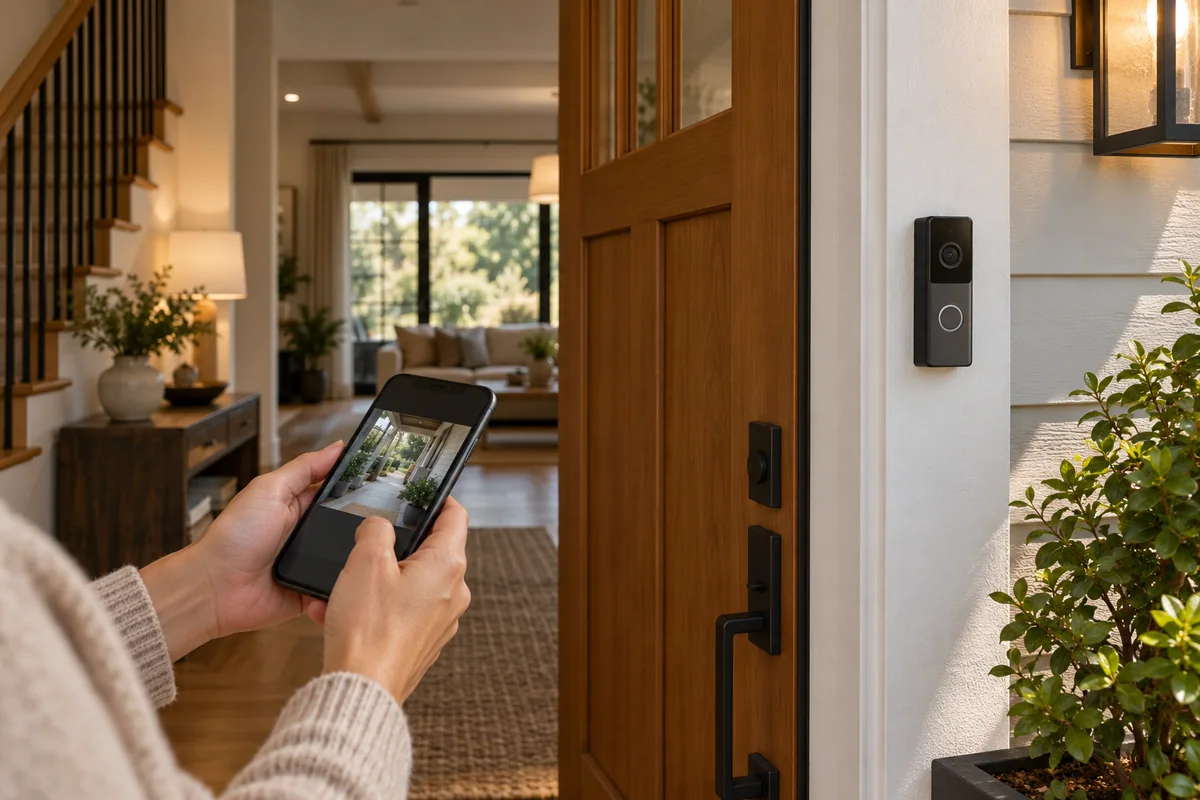
A lock controls entry; a video doorbell helps you see and speak to someone outside. If your budget starts with one, choose the problem that interrupts your day most often.
Read the guide →For a shared door, a visible keypad can make occasional access easier to explain. Phone-based entry works best when every regular user is willing and able to manage the required setup.
Read the guide →Automatic locking should match how your door actually closes. Compare a lock’s own closing detection with a separate door-contact requirement before choosing the final entrance package.
Read the guide →Battery upkeep is part of owning a smart lock. Compare the replacement procedure and backup entry as carefully as the finish, especially for a door you use only occasionally.
Read the guide →Start with the entry methods your household will use every week. Extra features earn their place when they replace a real inconvenience, rather than simply lengthen the specification sheet.
Read the guide →A retrofit quotation becomes useful when it is based on your actual cylinder and door, not a generic front-door photograph. Show the moving parts and the available inside space.
Read the guide →A separate keypad can make a retrofit lock easier for people who do not want phone-only entry. Buy it as a matched accessory, with the mounting position decided in advance.
Read the guide →A battery model can simplify placement; a suitable wired model can reduce routine charging. Choose around the existing power and recording brief rather than treating either approach as universally better.
Read the guide →A PoE doorbell is appealing when you can bring a suitable Ethernet run to the entrance. The purchase should include network power and a recording plan, not just the doorbell body.
Read the guide →If the goal is keeping lights comfortable while someone sits still, begin with presence sensing. Buy a camera when viewing or recorded evidence is genuinely part of the requirement.
Read the guide →A camera covering the whole yard is not necessarily the best camera for a doorway. Choose the scene in which a person or event must be recognizable, then compare lens options.
Read the guide →A broad overview and a close identification view solve different problems. Compare camera positions on a driveway sketch before deciding that a wider image can replace every additional camera.
Read the guide →A memory card can suit a modest single-camera brief. A compatible recorder becomes more attractive when several viewpoints and a central review routine matter to the household or property manager.
Read the guide →Choose the connection that is practical at the final camera position. PoE is compelling when cabling is available; Wi-Fi can suit a retrofit when power and coverage are already dependable.
Read the guide →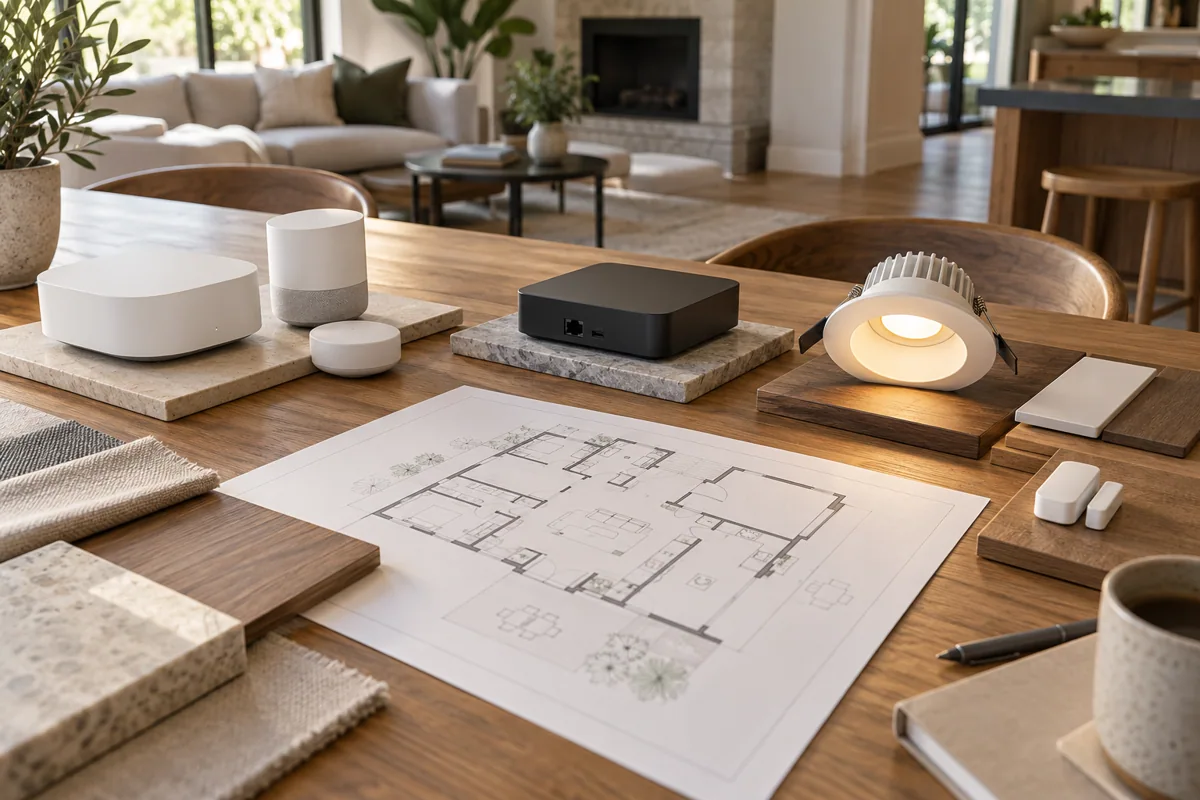
Choose a hub from a device list, not from its appearance. A mixed system needs a different discussion from a few compatible sensors in one apartment.
Read the guide →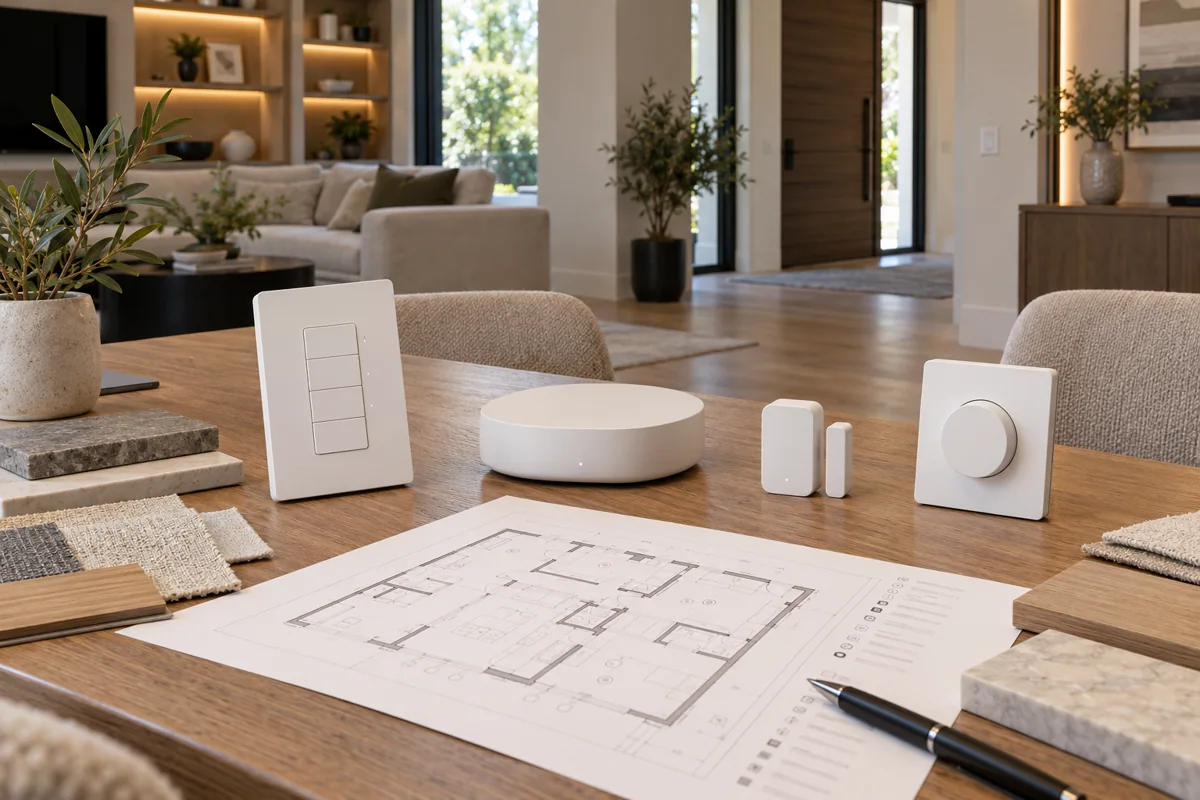
Home Assistant Green is a dedicated starting point for running Home Assistant. Your intended Zigbee or Thread devices still determine the additional radio hardware and setup work.
Read the guide →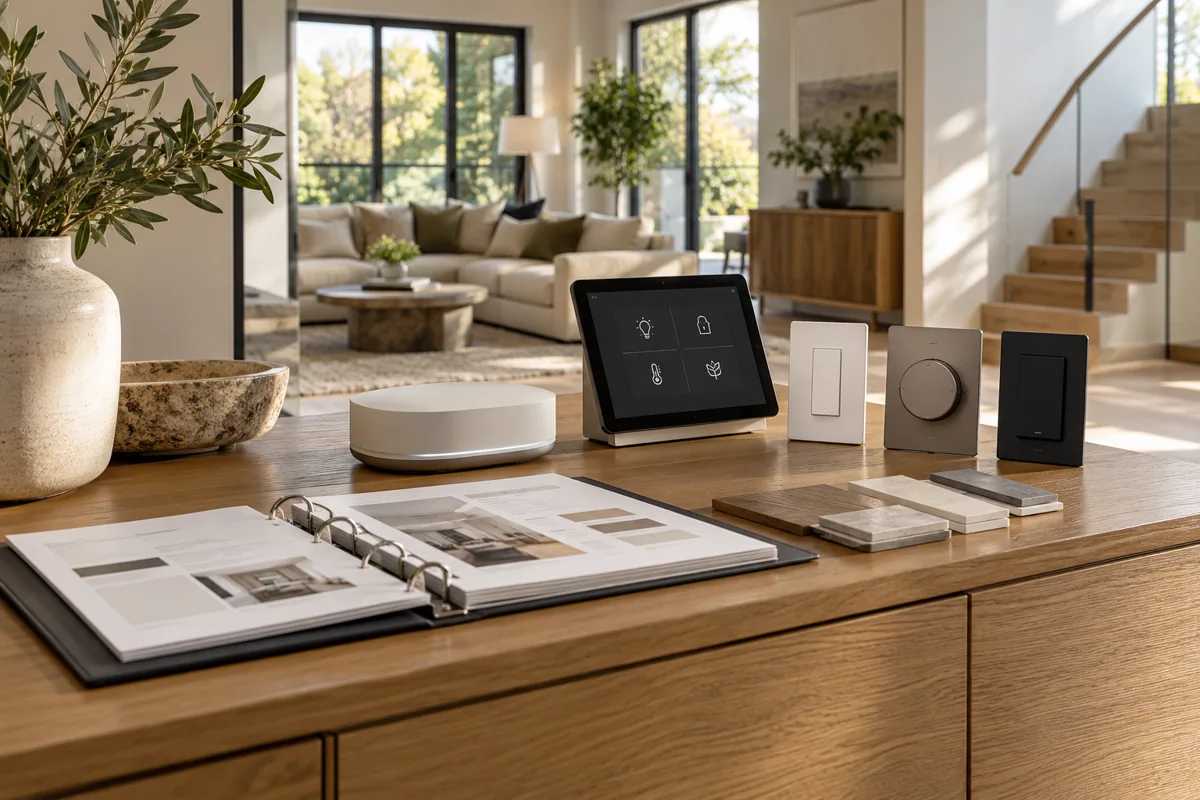
The better sensor is often the one that fits a supported network you already own. Treat a protocol change as a system decision, not an automatic upgrade.
Read the guide →Both approaches can belong in a well-planned home. The important question is whether your chosen platform exposes the functions you need from that exact device and connection path.
Read the guide →Choose an automation platform around your equipment and maintenance preference. A longer integration list is less useful than a system that someone can confidently support after installation.
Read the guide →Direct network devices can make a small purchase feel simple. Before repeating that choice across the house, count setup, coverage and everyday control alongside the hardware price.
Read the guide →Choose the hub for the first useful phase and a believable next phase. Future-proofing works best as a specific expansion list, rather than paying for every available technology today.
Read the guide →Local control is most valuable when it protects the actions you depend on. Buy against an offline action list, rather than treating the word local as a promise about every feature.
Read the guide →A shared control screen is useful when it simplifies real daily actions. Confirm the few controls your family needs before assuming that a shared platform replaces every manufacturer app.
Read the guide →A replacement hub is a project change, not just a new box. Choose a migration plan that preserves access, records what must be paired again and leaves a workable recovery path.
Read the guide →
Choose a smart bulb when changing the lamp itself is the simple improvement. Choose a suitable wall control when several existing lights should continue to feel like one familiar circuit.
Read the guide →
A no-neutral product can be useful in an older switch box, but the wiring is only half the decision. The connected lamp type and load must suit the exact device too.
Read the guide →
For a hallway or staircase, buy the multi-location arrangement rather than one isolated switch. The correct companion or approved wiring method depends on the exact control family.
Read the guide →
A dimmer cannot make every LED behave identically. Compare the exact lamp-and-control combination, especially if a quiet, low evening level is the reason you are upgrading.
Read the guide →
A starter kit is convenient when its included parts match your first room. A compatible standalone dimmer can make more sense when the necessary hub and controls are already in place.
Read the guide →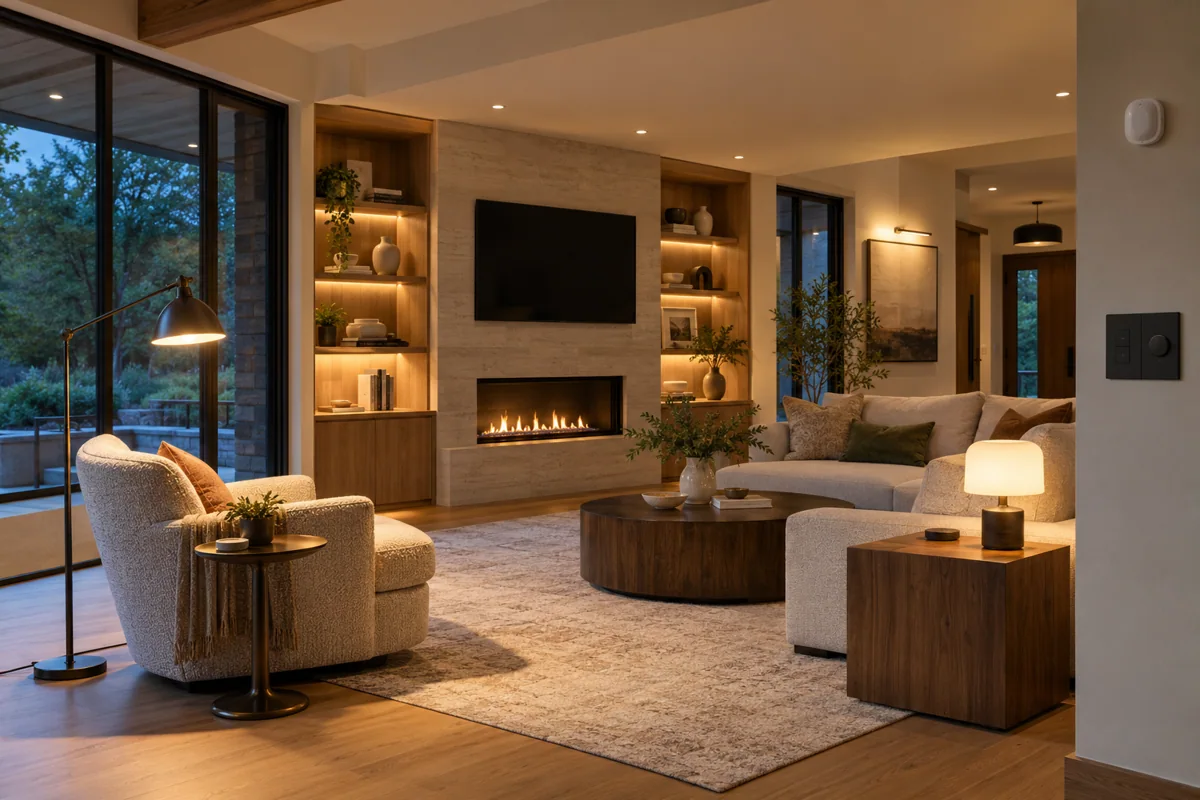
A compatible wireless remote can add convenient control without creating another wired switch location. Buy it for a real reach problem, such as a bedside or the far end of a room.
Read the guide →
A bridge becomes attractive when the purchase is becoming a lighting system rather than a single lamp. Compare your planned automations and accessories before deciding how much infrastructure to buy.
Read the guide →If your main wish is a comfortable everyday room, useful white-light behavior may matter more than a color palette. Color becomes worthwhile when you have a place and reason to enjoy it.
Read the guide →A light strip can disappear into joinery; a light bar is easier to position as a visible accessory. Choose the installation detail before choosing a lighting effect.
Read the guide →An accent light can make a room feel calmer without becoming a useful reading lamp. Decide whether you are lighting a task or a surface before selecting the shape.
Read the guide →A television lighting effect is a signal-path purchase as well as a lamp purchase. Start with the devices that supply your picture and sound, then specify the compatible lighting arrangement.
Read the guide →Do not assume the television’s built-in streaming app travels through an external HDMI box. Explain how you actually watch television before choosing a synchronization product.
Read the guide →If you already like a lamp, a suitable smart plug may add the switching you need. Choose a new accent light when its placement or lighting character is the improvement.
Read the guide →A replacement switch refreshes the visible control; a suitable relay can preserve existing hardware. The electrical enclosure and load determine which option is a realistic purchase.
Read the guide →A fan motor and a dimmable light are different electrical loads. Choose a control explicitly suitable for the intended load, even when two wall products look almost identical.
Read the guide →Decora Smart covers several product families. Select by the exact model and documented wiring requirements, then confirm the app and companion controls that belong to that generation.
Read the guide →Wi-Fi bulbs can make an easy first experiment. A room-by-room purchase needs a network and switching plan so the result stays convenient after the novelty of color control wears off.
Read the guide →An integrated sensor is tidy when the wall position can see the right activity. A separate sensor offers more placement freedom when the switch location is a poor viewpoint.
Read the guide →A well-placed button makes a useful action available without a phone or spoken command. Buy it for a specific routine that everyone should be able to use immediately.
Read the guide →A room may contain several independent lighting circuits, while one switch group can serve a larger area. Build the shopping list from the electrical and control layout rather than a room count alone.
Read the guide →
Choose monitoring when you want to learn something about the connected appliance. If the job is simply turning a lamp on a schedule, a suitable basic plug may meet the brief.
Read the guide →The Matter logo does not tell you which radio path a plug uses. Check the transport and controller requirements, then choose the option that fits the household’s existing network.
Read the guide →Outdoor use changes the buying decision: location, moisture exposure, cable routing and the exact product’s installation limits all matter. An indoor plug under a makeshift cover is not an equivalent configuration.
Read the guide →A smart strip can organize several devices in one place; individual plugs give more freedom across sockets. Decide which equipment should switch together and which must keep its power.
Read the guide →A permanently installed smart outlet can look cleaner in a planned renovation. A plug-in adapter is easier to move and replace; the right choice depends on access and how permanent the room layout is.
Read the guide →Before automating a lamp or appliance, ask what both the plug and the connected device do after power returns. A useful schedule does not replace a predictable restart routine.
Read the guide →Select a smart plug for the type of load as well as its rating. A heater, motor and ordinary lamp can make very different demands despite a similar headline power figure.
Read the guide →Buy an energy-monitoring plug if its readings will help you make a decision about a connected device. Treat the result as appliance-level information, rather than a promise about the whole utility bill.
Read the guide →Choose a relay from the circuit it must interface with, not from a similar product name. Dry-contact switching and power measurement are separate requirements that need an electrician’s model-level assessment.
Read the guide →Choose the measurement scope before choosing hardware. Individual plugs answer questions about movable appliances; a suitable professionally installed meter can address a different part of the electrical system.
Read the guide →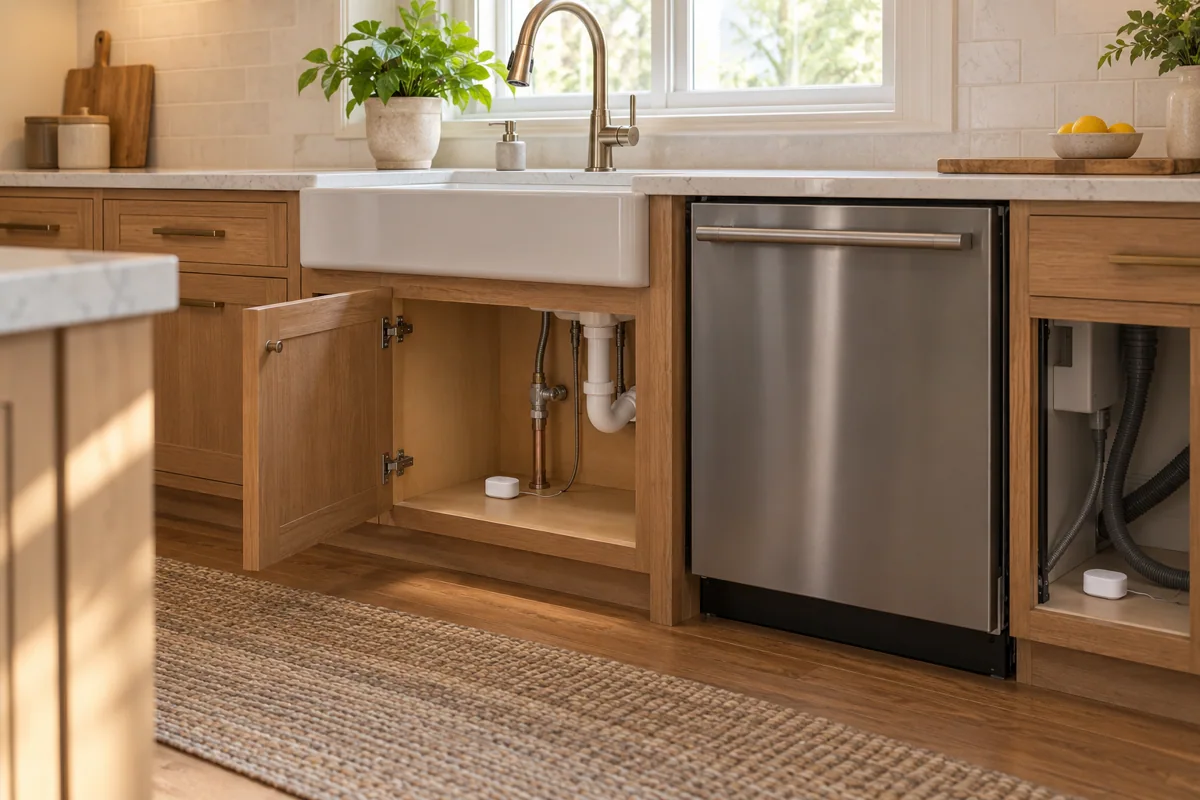
Choose sensing for the activity, not simply for the room name. A corridor pass-through and quiet reading on a sofa place different demands on an automatic lighting system.
Read the guide →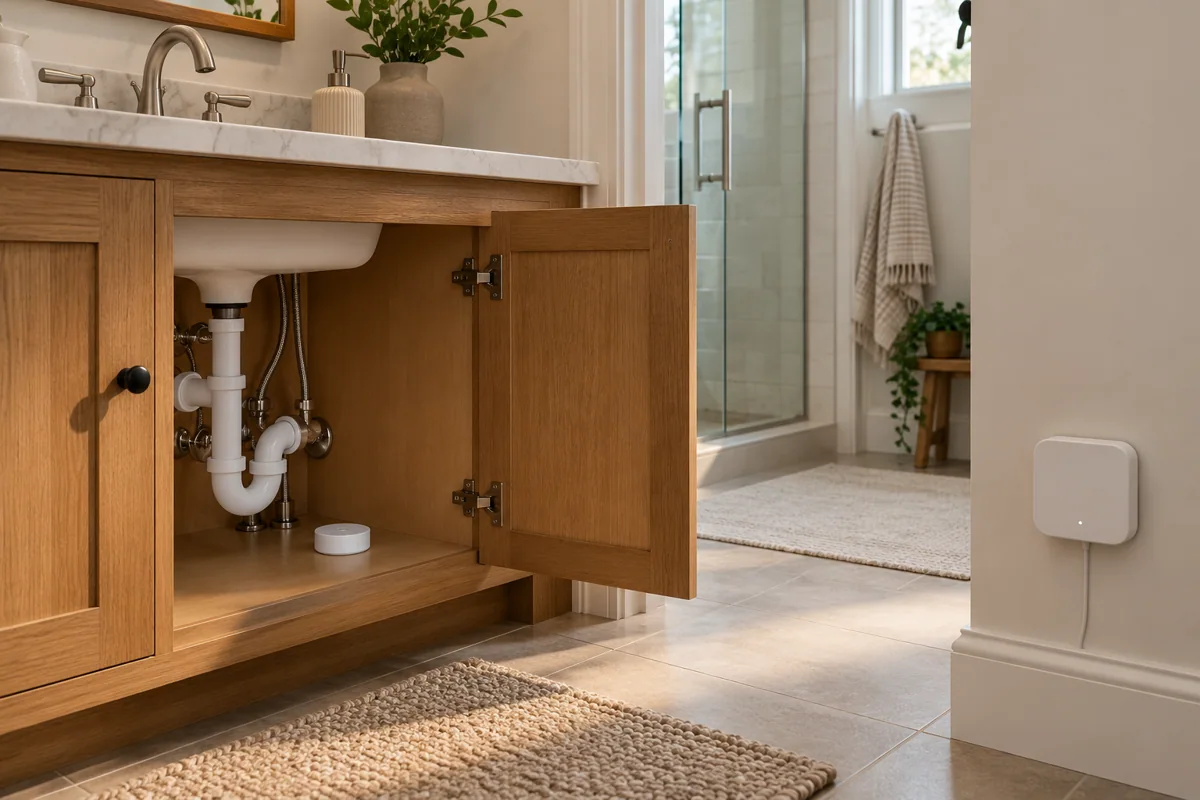
Zone-based sensing is attractive in an open room with distinct activities. Buy it with a room-layout and commissioning plan rather than expecting a product’s maximum zone count to design the space for you.
Read the guide →
P2 is a Matter-over-Thread contact sensor. The useful first purchase check is whether your intended platform already has the required Matter controller and Thread border-router functions.
Read the guide →Expansion is a good time to review the network, but it is not a reason to discard working sensors automatically. Compare the next opening and the platform you want to use.
Read the guide →A sensor tells you about water at its location; a supported shutoff arrangement can add a defined response. Start with the risk point and who can act when a notification arrives.
Read the guide →A point sensor and a detection cable cover water risk differently. Choose from the cabinet layout and service access, then compare the supporting system each option needs.
Read the guide →A valve controller must fit the existing valve and its surroundings. Send the handle, pipe and clearance details before treating a retrofit actuator as a ready-made universal shutoff solution.
Read the guide →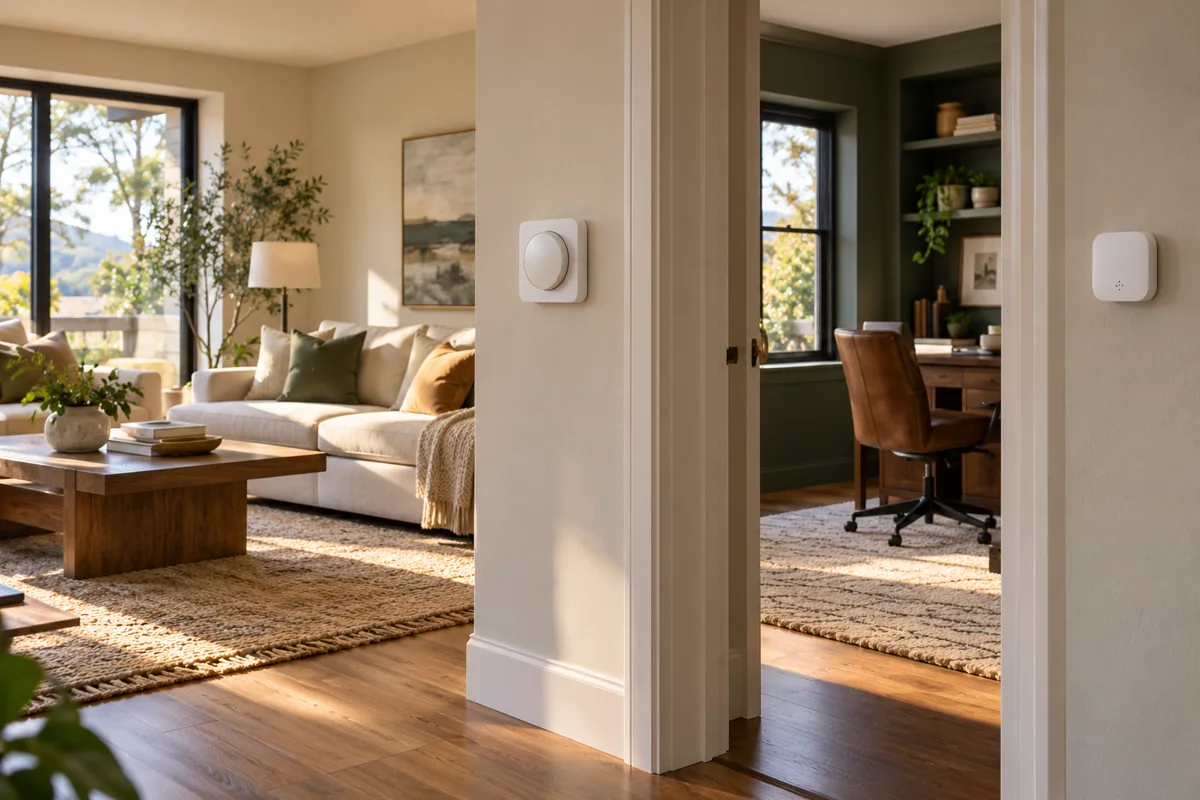
Choose a display when someone benefits from seeing the room reading without opening an app. A discreet sensor is useful when its main job is feeding a supported automation or monitoring routine.
Read the guide →A small wireless sensor is easy to overlook once installed. For a larger order, choose mounting and maintenance arrangements that let the household check each device without dismantling the room.
Read the guide →A physical scene control should reduce thought, not add another command language. Choose the control format around the people who will use it, including the least app-interested person in the house.
Read the guide →
A smart thermostat is worth shortlisting only after the heating and cooling equipment is identified. A familiar wall shape or a similar-looking cable does not establish compatibility.
Read the guide →If a room reading should influence a thermostat, start with a sensor that the exact thermostat supports. A standalone monitor is a different purchase when the goal is simply understanding comfort.
Read the guide →Start by confirming compatibility across the models you are considering. Then compare the specific comfort, sensor and interface features that will matter in your own home, rather than choosing by tier name alone.
Read the guide →
A missing common wire changes the installation discussion, but the answer depends on the whole HVAC wiring arrangement. Get the supported power solution identified before ordering the thermostat and accessories.
Read the guide →Before buying several room sensors, decide which locations will tell you something useful about comfort. A convenient shelf beside a sunny window may measure the shelf more than the experience you want to improve.
Read the guide →An infrared bridge and a wired thermostat control different equipment paths. Identify the appliance and its existing controls before choosing the accessory that promises a smarter comfort routine.
Read the guide →A visible room reading can make comfort discussions easier for the household. Choose the display for readability and placement, then separately confirm any automation or remote-monitoring connection you want.
Read the guide →A smart thermostat can make suitable control routines easier to manage. Your equipment, building and habits still determine results, so compare a realistic comfort plan rather than buying a promised saving percentage.
Read the guide →
Retrofit curtain products are shaped around the hardware they move on. Confirm the rod or rail arrangement and opening direction before choosing a motor version or deciding how many units to buy.
Read the guide →
A curtain driver moves a curtain along its support; a tilt accessory changes the angle of suitable blind slats. Choose the action your existing window covering can actually perform.
Read the guide →
A retrofit roller-blind motor must suit the existing tube and mounting arrangement. Measure the internal hardware properly before buying a kit based only on the visible width of the blind.
Read the guide →Motor quantity follows the moving curtain panels and supported setup, not just the number of windows. Show the complete opening pattern before comparing a single-device price with a room quotation.
Read the guide →A rechargeable retrofit can avoid some new wiring; a suitable permanent supply may suit a planned renovation. Choose around access, finished appearance and the maintenance routine you are willing to keep.
Read the guide →Automatic shades feel complete when someone can change them without learning your app. Include a supported physical control and a clear manual fallback in the purchase plan.
Read the guide →If glare is the problem, full blackout may be more than you need. Choose a window-covering arrangement that can provide a useful working position while retaining the daylight you enjoy.
Read the guide →A motor works with the running hardware you already have. If the curtain catches or needs a sharp pull, assess the rail, rings and fabric arrangement before deciding which driver to buy.
Read the guide →
One speaker can suit casual listening across a room. A supported stereo pair becomes worth comparing when a defined seating position and musical separation matter more than minimum hardware count.
Read the guide →Choose a speaker for the space around it as well as the features on its page. A larger model earns its place when your listening use and available placement support the difference.
Read the guide →A soundbar offers a different installation path from an amplifier feeding existing speakers. Start with the equipment and cabling you intend to keep before comparing new audio boxes.
Read the guide →A turntable-to-speaker plan needs more detail than a Bluetooth logo. For a wired line-in arrangement, confirm the source output and the adapter path supported by the speaker.
Read the guide →Playing music around the home and matching dialogue to a television picture are different jobs. Tell the supplier which rooms need each experience before choosing a single audio package.
Read the guide →A wired network can be worth considering where Wi-Fi is inconsistent, but the speaker’s supported connection method still matters. Include the appropriate adapter and a tidy route back to the network.
Read the guide →Bluetooth is useful for an immediate source connection; a supported Wi-Fi setup can suit a more integrated home routine. Compare how the household actually starts and shares music before choosing.
Read the guide →The television connection is part of the soundbar purchase. Send the exact television model and port information so the proposed audio system can be matched to your intended sources and formats.
Read the guide →A new automation hub does not automatically improve Wi-Fi coverage or repair a poor network layout. Identify which connection is failing before choosing the next box for the home.
Read the guide →A PoE camera order needs a matching power-and-network plan. Count the intended devices and their documented requirements, then check the proposed switch or recorder rather than assuming spare sockets are sufficient.
Read the guide →For a Canadian or US project, buy the regional hardware appropriate to that installation. A matching product name from another market is not enough to establish that wireless devices belong together.
Read the guide →A product family can contain different hardware generations and software histories. Use the exact version and current requirements when buying Matter devices, especially when mixing existing stock with a new system.
Read the guide →Choose the first package around the inconvenience you want removed this month. A useful small system is a better starting point than a mixed basket of devices with no shared daily purpose.
Read the guide →A useful quote begins with a real project brief. Tell HomeTech where the equipment will be used, what you already own and the specific result you want to purchase.
Read the guide →If the ceiling light is adequate but evenings feel harsh, start with controllable table or floor lamps.
Read the guide →Choose separate reading and television lighting zones before buying a larger fixture.
Read the guide →A steady light behind the television and lighting that follows the picture solve different wants.
Read the guide →An open room does not need one lighting setting.
Read the guide →If the screen looks good at night but washes out in the afternoon, review window shading before replacing the television.
Read the guide →
A scene button earns its place when someone can find it without opening an app.
Read the guide →
For a rental, start with portable lighting and controls rather than replacing wall devices.
Read the guide →If the household keeps turning subtitles on because dialogue is difficult, start by assessing the television audio connection and a suitable front-speaker solution.
Read the guide →For background music beside a reading chair, a compact speaker can be a more suitable first purchase than a home-theater package.
Read the guide →A person crossing a room and a person sitting quietly are different sensing problems.
Read the guide →
A shared bedroom benefits from independent bedside lights and controls before an elaborate sleep scene.
Read the guide →If light enters around the fabric or edges when the curtain is closed by hand, a motor alone will not solve the problem.
Read the guide →For rotating shifts, a convenient manual override matters more than a universal sunrise routine.
Read the guide →
The best first upgrade for a guest room is often a clear bedside control and dependable ordinary lighting.
Read the guide →
A gentle path light can make a bedroom-to-bathroom route easier to use without switching on full room lighting.
Read the guide →If one bedroom feels different from the rest of the home, begin with room measurements and the existing HVAC layout.
Read the guide →For a desk inside a bedroom, choose an independent work-light group before linking it to the sleep scene.
Read the guide →A roller-blind retrofit can be worth considering when the fabric and mechanism are still good but daily operation is inconvenient.
Read the guide →If someone regularly cuts power at the wall, buying more connected bulbs may not improve the bedroom.
Read the guide →Buy the upgrade that fixes the daily inconvenience you notice most.
Read the guide →If your body casts a shadow across the cutting area, start with task-light placement rather than another whole-room scene.
Read the guide →Start beside an identifiable under-sink risk point that can be inspected and reached.
Read the guide →A smart dimmer is a better purchase when the island pendants and their lamps support its load requirements.
Read the guide →For a small pantry, door-triggered lighting can be a sensible first automation.
Read the guide →Use a plug-control proposal for an appliance whose operation and rated load suit that arrangement.
Read the guide →A dining room often needs a practical bright setting, a softer meal setting and a simple off action.
Read the guide →
If the goal is a simple door-state reminder, a contact-sensor route may be more appropriate than video.
Read the guide →Before adding a water sensor, reorganize enough cabinet space to keep its detection position and battery access clear.
Read the guide →If the aim is to soften morning light while keeping a view, adjusting slat angle may be enough.
Read the guide →During a kitchen renovation, the best smart-lighting purchase begins with a circuit and driver plan.
Read the guide →
For a guest washroom, an obvious light control and an optional gentle night setting are usually more useful than a complex sensor package.
Read the guide →A bathroom water sensor is useful when someone can identify the location and act on the alert.
Read the guide →A sensor behind an immovable appliance is difficult to test or maintain.
Read the guide →Start with humidity and temperature readings in representative basement locations.
Read the guide →Plan basement water monitoring by separate collection points rather than floor area alone.
Read the guide →
For a home left empty between visits, a clear local response plan matters as much as the sensor list.
Read the guide →If you want an additional awareness point near a basement water-risk area, define a suitable sensor position and alert response.
Read the guide →
Choose a button when the person wants direct control; add sensing when hands-free entry would genuinely help.
Read the guide →A useful sensor kit needs a working path from the final utility-room location to its controller and alert recipient.
Read the guide →
Inside a condo, a water-alert plan should fit the resident’s authority and the property’s maintenance process.
Read the guide →Before comparing fingerprints or app features, photograph and measure the door that will receive the lock.
Read the guide →The right doorbell choice depends on existing power, mounting permission and how you will service it.
Read the guide →If the rear door’s existing lock works well, a door-state sensor may solve the actual question with less disruption.
Read the guide →
For a garage arrival upgrade, start with the pedestrian door and path lighting.
Read the guide →For a shared home, the main buying question is how each person’s access is issued and removed.
Read the guide →A local door chime can help a household notice a selected opening without adding video.
Read the guide →Before comparing doorbell resolution, decide whether your priority is a visitor’s face, a doorstep area or a specific approach.
Read the guide →A patio-door sensor purchase starts with the frame and exposure, not just the door width.
Read the guide →A door-lock proposal is more complete when it explains low-battery handling and the chosen backup method.
Read the guide →
For a busy side entrance, choose an entry method and light control around the way people carry bags and remove shoes.
Read the guide →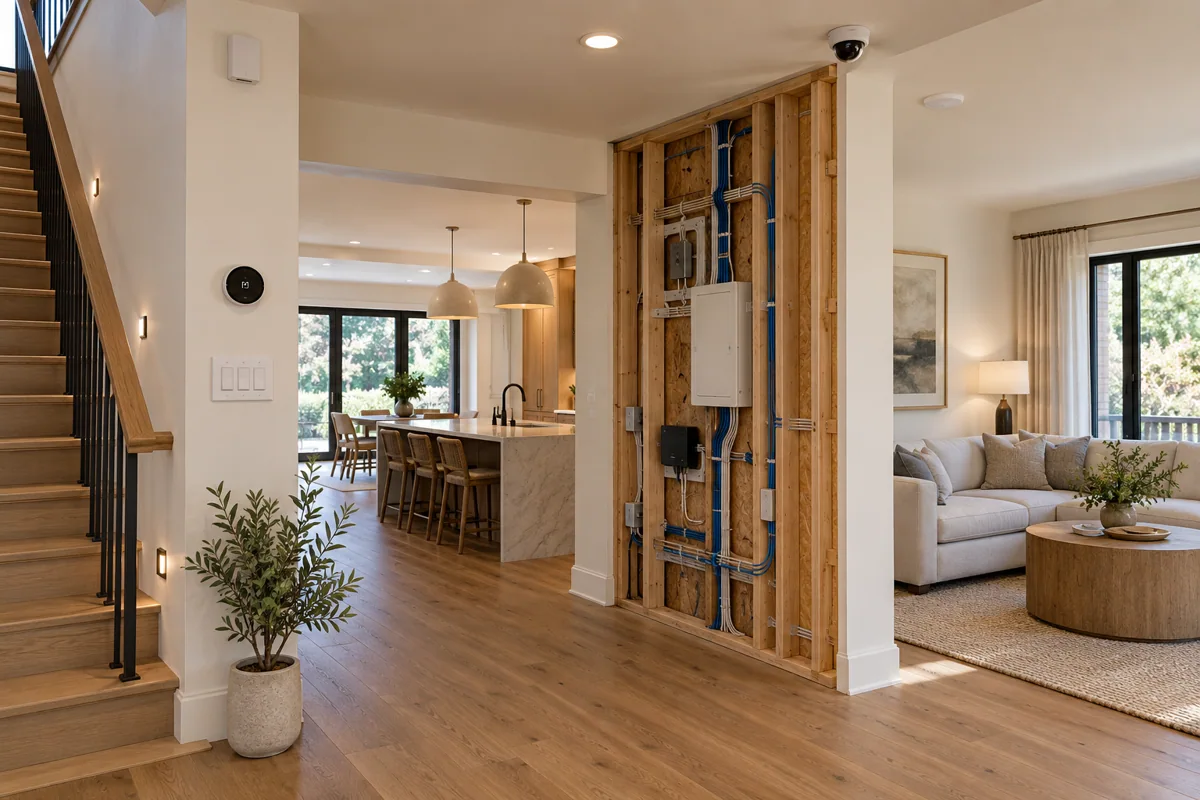
Before walls close, a point plan can be more valuable than early device purchases.
Read the guide →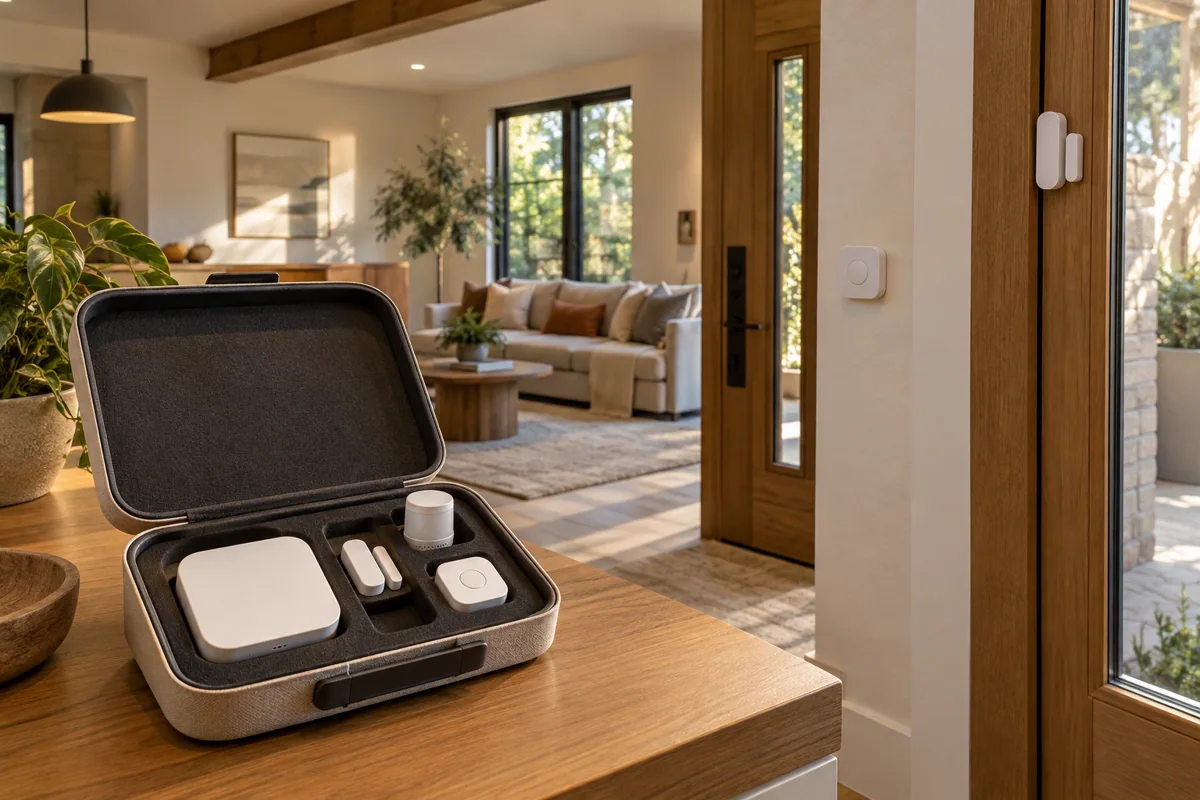
A useful show-home demonstration connects one attractive scene to a clear purchase scope.
Read the guide →For a townhouse project, hardware quantities are only one part of the order.
Read the guide →
Create upgrade tiers around meaningful use cases: a useful entry package, broader room control and selected comfort additions.
Read the guide →Use a standard plan as a starting point, then check actual doors, lighting loads and selected finishes before repeating the order.
Read the guide →A completed device installation still needs a usable handover.
Read the guide →For an empty unit, focus on selected status checks and clear maintenance alerts.
Read the guide →After decorating, choose an upgrade that solves a clear problem without assuming every wall device must change.
Read the guide →Wireless communication does not mean every device is battery powered.
Read the guide →A representative pilot can reveal door fit, control habits and handover work before a larger order.
Read the guide →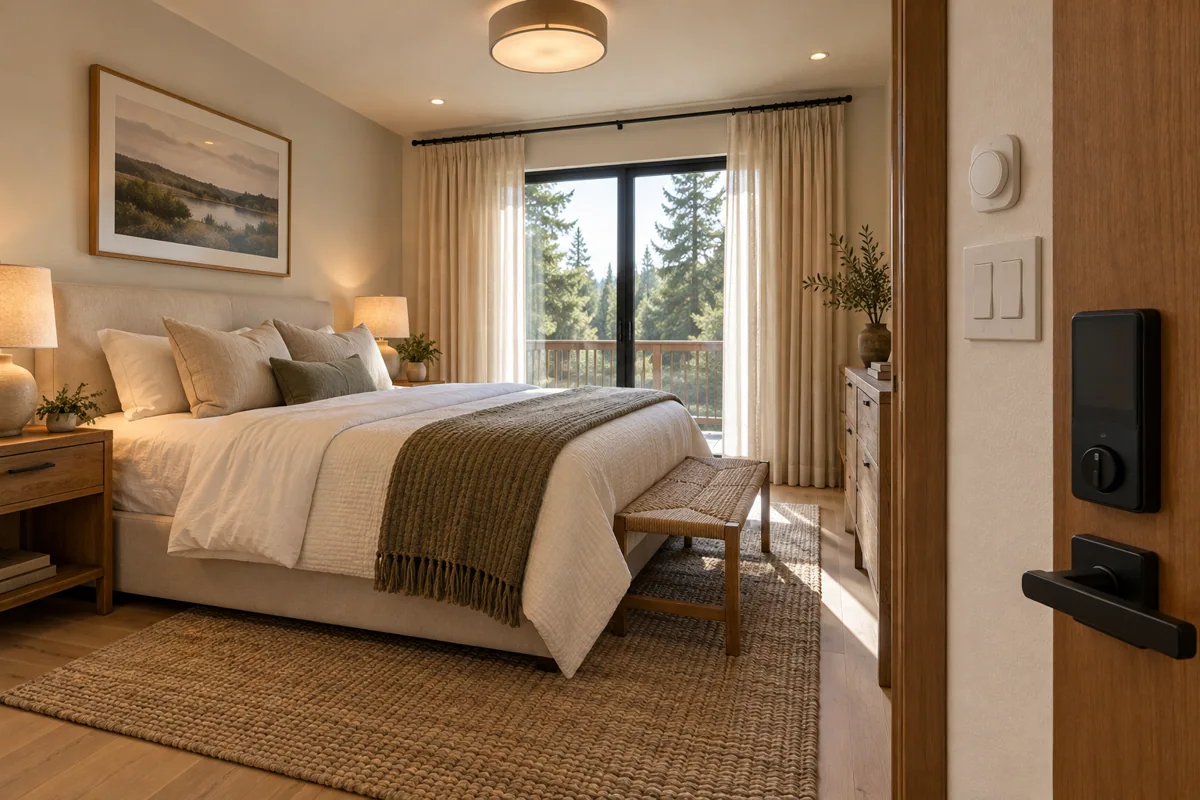
For a vacation rental, prioritize a clear arrival route, suitable entry hardware and understandable lighting.
Read the guide →For several bookings, the credential process matters more than an impressive list of opening methods.
Read the guide →
A room-reset button can help staff return agreed lights and shades to a starting state.
Read the guide →If an entrance camera is appropriate for the property, define its allowed view, viewing permissions and recording arrangement before comparing models.
Read the guide →For a guestroom concept, choose a small set of recognizable physical controls and clear lighting groups.
Read the guide →When adding smart devices to several rentals, separate property ownership, credentials and point names from the start.
Read the guide →Choose sensor names, contact permissions and a practical inspection process alongside the devices.
Read the guide →A connected thermostat can be convenient for the operator, but guests still need understandable local control.
Read the guide →Before replacing working smart devices at turnover, review ownership, old credentials and the handover process.
Read the guide →A compact range of reviewed devices can make support and replacement easier across several properties.
Read the guide →An office corner benefits from a few task-based light settings, not a complicated automation network.
Read the guide →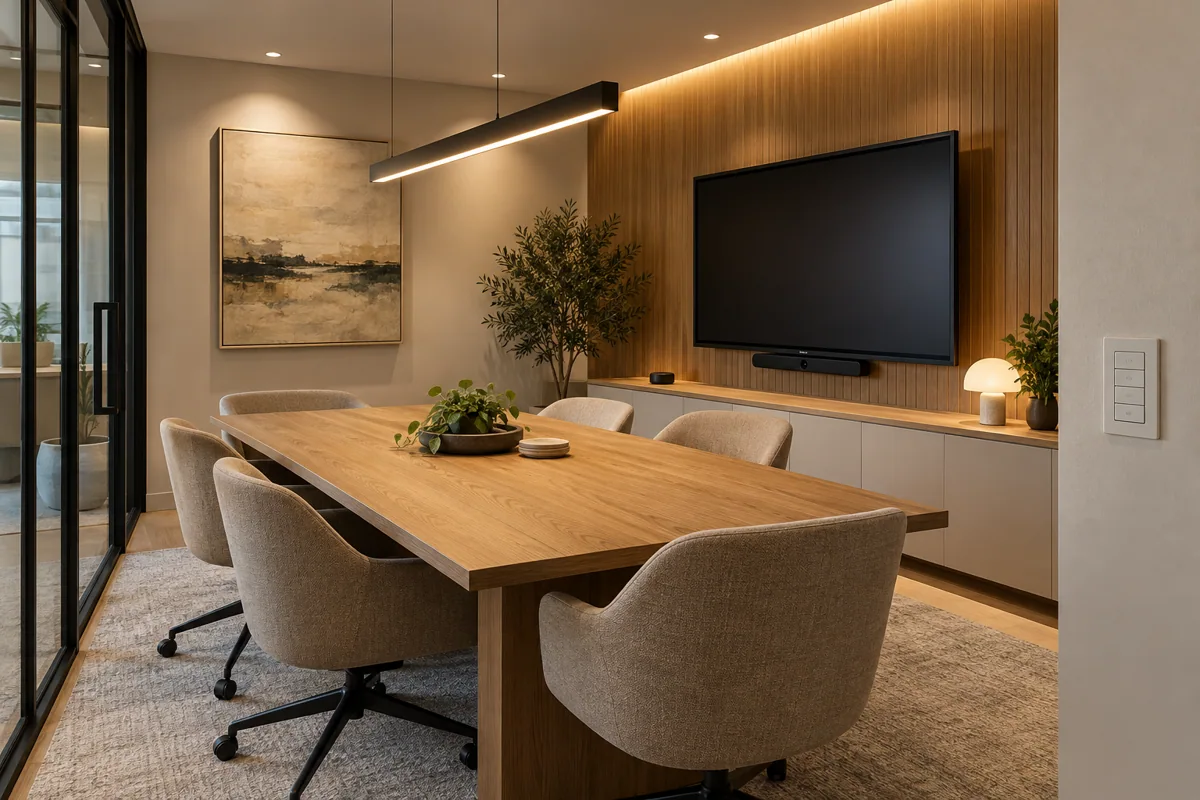
For a small meeting-room concept, distinguish discussion lighting from presentation lighting before choosing controls.
Read the guide →Build a small comparison bay around activities customers recognize: reading, dining or watching a screen.
Read the guide →A closing-lighting button can be useful when it controls a reviewed set of lights.
Read the guide →For a showroom, display a real mechanism and explain its fit requirements alongside the movement.
Read the guide →Choose a portable kit that explains one useful scene in a few minutes.
Read the guide →When a business takes over a fitted space, review the existing smart devices before adding more.
Read the guide →Choose camera placement, recording arrangements and viewing permissions together.
Read the guide →For a small office with uneven comfort, begin with representative readings and the building’s HVAC arrangement.
Read the guide →A good demonstration ends with a few concrete questions about the buyer’s room, location and desired outcome.
Read the guide →Start with a daily action the resident wants to make easier, such as controlling a lamp from the chair.
Read the guide →Choose night lighting around the resident’s route and preferred brightness.
Read the guide →For a wheelchair route or another seated-use layout, control placement can matter more than additional automation.
Read the guide →If reaching or pulling a curtain is inconvenient, consider a suitable motor retrofit with an accessible local control.
Read the guide →For an independent-living comfort project, start with the readings the resident actually wants to share.
Read the guide →A clearly labeled away button can be easier to trust than a scene that guesses occupancy from one event.
Read the guide →Choose a sensor routine around the actions the household actually wants.
Read the guide →For a stairway upgrade, identify usable controls at both ends before adding automatic scenes.
Read the guide →A hallway scene is more useful when it accounts for coats, bags and pauses at doors.
Read the guide →Choose the control method the household wants to use, not the one that looks most impressive in a demonstration.
Read the guide →Start with one complete room when the family is still deciding how much automation it wants.
Read the guide →A mixed-brand room can be a good fit when each product serves a clear purpose and the intended control paths are documented.
Read the guide →If devices repeatedly lose their connection, a network review may be a better next purchase than more accessories.
Read the guide →Local-control claims should be assessed action by action.
Read the guide →Before ordering a Thread-based room combination, review the chosen Matter controller and Thread border-router requirements.
Read the guide →Compare whole-home proposals by the job each device performs, not only the total device count.
Read the guide →Start with an inventory of the devices and functions that already work.
Read the guide →A scene that spans several devices depends on their actual supported interfaces and configuration.
Read the guide →A useful quote starts with the project city, country and intended installation.
Read the guide →A useful first request is short: room type, location, the daily problem and a few relevant photographs.
Read the guide →A store becomes easier to plan when the customer can buy a clear outcome: a working entry system, comfortable lighting, or a room proposal.
Read the guide →A compact smart-home store does not need every wall covered with devices.
Read the guide →The opening order should make it easy to recommend a sensible purchase.
Read the guide →For first-time buyers, room-based demonstrations usually make the purchase easier to picture.
Read the guide →
A visitor may like whole-home automation but be unwilling to decide on every room.
Read the guide →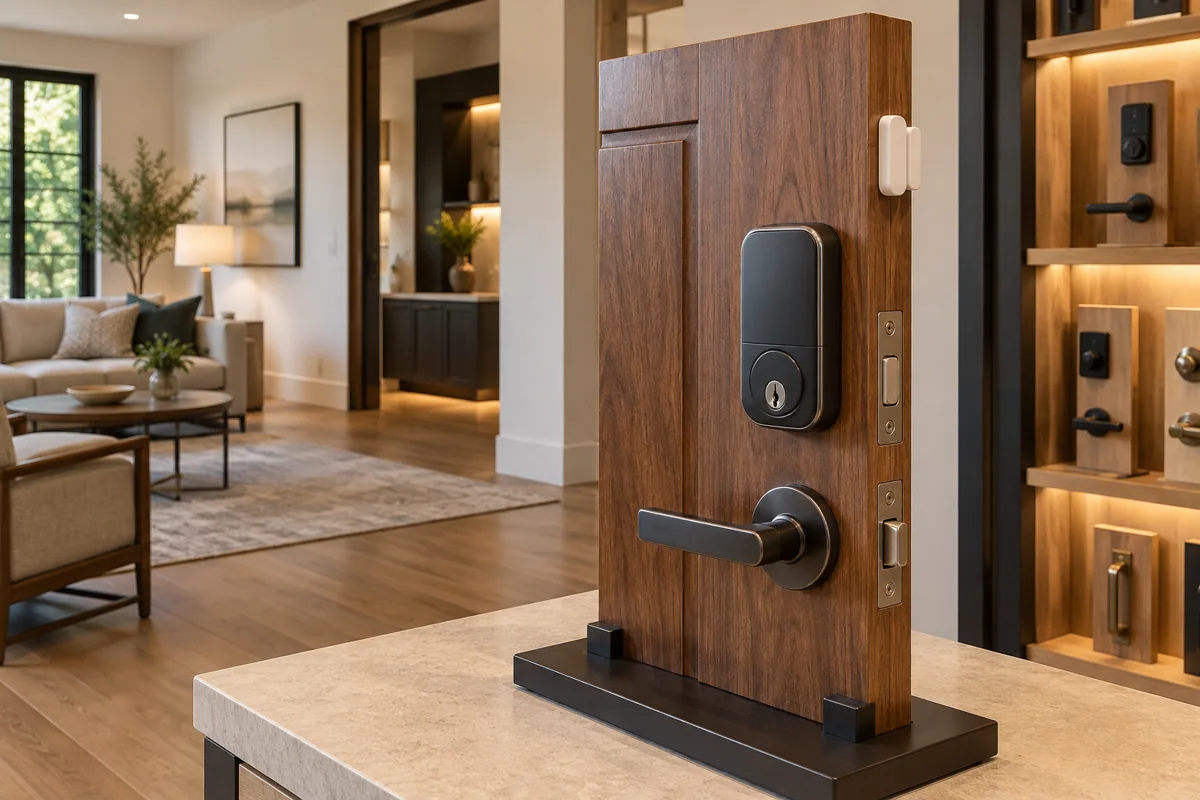
A dimmer demonstration is only useful when it resembles the customer’s eventual installation.
Read the guide →The most useful item beside a demonstration lock may be a measurement card.
Read the guide →A household rarely has just one opinion about smart controls.
Read the guide →Yes, if you can explain exactly what the demonstration proves.
Read the guide →A demonstration creates questions. If the customer must leave that context to explain a floor plan elsewhere, useful details get lost. Put a practical consultation space close enough to turn an observed effect into a room brief.
Read the guide →A customer cannot compare two starter bundles if one display quietly relies on equipment outside the box.
Read the guide →A camera display can show a useful buying decision without recording every person who walks into the store.
Read the guide →A working shade sample makes the benefit easy to see.
Read the guide →A multiroom audio shopper wants to understand daily use, not only volume.
Read the guide →In a Canadian or US store serving several language communities, useful bilingual material is more than translated slogans.
Read the guide →An established renovation business may not need a separate smart-home shop immediately.
Read the guide →Customers choosing switches, shades or decorative lighting are already making room decisions.
Read the guide →An access specialist has a useful starting point: customers already care about how people enter and what happens afterward.
Read the guide →Many buyers know the lighting feeling they want but cannot specify a control model.
Read the guide →Use walk-ins for discovery and appointments for decisions that need a plan.
Read the guide →A demonstration unit may be paired, configured and repeatedly handled.
Read the guide →A loan sample can help with a specific uncertainty, such as a control’s reach or a speaker’s placement.
Read the guide →A customer considering a whole property may hesitate over daily usability rather than the equipment list.
Read the guide →A new salesperson does not need to recite every specification on day one.
Read the guide →A polished display loses its value if the first button press fails.
Read the guide →A higher package is not automatically a better purchase.
Read the guide →Someone adding one room is making a different purchase from someone starting fresh.
Read the guide →A visitor who enjoyed the display may forget which pieces were necessary.
Read the guide →The device price is not always the whole use decision.
Read the guide →A useful store website helps people decide what to bring and why to visit.
Read the guide →Clear support boundaries make a product easier to buy.
Read the guide →Homeowners, builders and installers can all buy smart devices, but they do not buy the same way.
Read the guide →An empty-looking patch is not necessarily wasted space if it has a planned purpose.
Read the guide →You can start the store discussion without a polished business deck.
Read the guide →A supplier proposal is easier to evaluate when it explains the buyer problem, exact regional models and a coherent demonstration.
Read the guide →The lowest-looking quotation may simply omit a hub, mounting accessory or service item.
Read the guide →When sourcing for Canada or the United States, compare the actual regional SKU and its documentation.
Read the guide →A sample is useful when it resolves a specific purchasing uncertainty.
Read the guide →An invoice can document a purchase, but it does not by itself establish every reseller or installer claim.
Read the guide →A kit can simplify the first room but complicate a bulk equipment list.
Read the guide →Ordering everything early does not always make a project easier.
Read the guide →Good sourcing information lets an installer decide whether the proposed order can actually be delivered.
Read the guide →A discontinued or unavailable item can often be replaced, but a similar feature list is not enough.
Read the guide →A correct warehouse count is only the beginning of a multi-unit order.
Read the guide →A spare is valuable when it helps recover an important function without creating a new compatibility problem.
Read the guide →A supplier’s catalogue entry and a delivery-ready order are not the same thing.
Read the guide →Two offers for the same-looking device can lead to different after-sales work.
Read the guide →A retailer needs more than a product photograph saved from a marketplace.
Read the guide →A loose sensor may demonstrate its finish but not the experience a store would sell.
Read the guide →The answer depends on the job you want to do. A store seeking a mixed-brand assortment has a different immediate need from an installer pursuing a manufacturer’s specific training or access to a particular product line.
Read the guide →Receiving is the last easy opportunity to find a mismatch before equipment spreads across a project.
Read the guide →A fast-selling sensor is not enough if its required companion is missing.
Read the guide →For orders serving Canada and the United States, label the quotation currency clearly and compare the same scope.
Read the guide →A contractor needing devices for one building may not need a retail partnership.
Read the guide →A tick beside “compatible” does not tell a buyer enough.
Read the guide →Visible controls are part of the room’s finish as well as its system.
Read the guide →A useful demonstration should be reproducible.
Read the guide →Mounting plates, power supplies and compatible controls are easy to overlook beside the main device.
Read the guide →The first order is an opportunity to evaluate communication and documentation as well as the hardware.
Read the guide →For a store or repeat housing package, product continuity matters beyond the first shipment.
Read the guide →A device count does not tell an integrator what the household expects.
Read the guide →A floor plan is a useful start, but it does not reveal every mounting, wiring or coverage constraint.
Read the guide →For a mixed-brand project, a compatibility matrix is more useful than a row of ecosystem logos.
Read the guide →Account ownership is part of the installation design, not an afterthought at handover.
Read the guide →A room full of new devices cannot compensate for an unsuitable network foundation.
Read the guide →A customer buying automation still needs an ordinary way to use the room.
Read the guide →The best handover document is one the resident can use when they have forgotten the demonstration.
Read the guide →A small-sounding scene request can require another sensor, a different control path or extra commissioning.
Read the guide →A buyer may care most about what continues working without the internet.
Read the guide →A backup file is not a complete recovery arrangement.
Read the guide →A working sample room does not prove that neighboring units are isolated.
Read the guide →For a builder, the sample home is where the repeatable smart-home package becomes concrete.
Read the guide →A date on the calendar does not make a site ready for commissioning.
Read the guide →A customer comparing project offers needs to know whether they are buying devices alone or a designed installation.
Read the guide →“The system does not work” rarely gives a remote support team enough to help.
Read the guide →A clear photo brief can turn a vague request into a useful preliminary proposal.
Read the guide →A phased project should make the first purchase useful in its own right while preserving a deliberate path forward.
Read the guide →A long technical explanation can leave a resident less confident than a short practical session.
Read the guide →A takeover is not the same as a new installation with familiar devices.
Read the guide →When a commercial tenant changes, retained devices need more than a new scene name.
Read the guide →Choose the cooperation route by the work you want to own.
Read the guide →The easiest offer to explain is often a focused project review rather than an entire smart house.
Read the guide →A showroom can help customers choose an experience, while an installer turns the approved design into usable local work.
Read the guide →A useful introduction explains what the customer wants and why a discussion is timely.
Read the guide →A referral works better when the customer understands the introduction.
Read the guide →Before arranging a technical discussion, capture the project’s location, type, stage and requested outcome.
Read the guide →A project can reach a business through more than one introduction.
Read the guide →A referral should have a practical follow-up plan, not just a transferred email address.
Read the guide →A potential referral arrangement is easier to manage when the commercial terms are agreed before anyone presents a reward as automatic.
Read the guide →A dealer and an installation partner can work on the same project without doing the same job.
Read the guide →A full storefront is one route, not the only way to begin.
Read the guide →A joint promotion needs a clear customer offer, not just two logos next to each other.
Read the guide →A professional cooperation introduction should explain what your team can deliver.
Read the guide →A smart-home discussion is more useful before every finish and wiring choice is fixed.
Read the guide →A property team may need better handover, clearer leak alerts or consistent unit records.
Read the guide →You do not need to diagnose a friend’s whole home to make a useful introduction.
Read the guide →A new category becomes easier to sell when staff can recognize its suitable buyer and required setup.
Read the guide →A broad territory sounds attractive, but a useful partnership begins with practical reach.
Read the guide →A customer should be able to understand who supplies, installs, configures and supports the system.
Read the guide →You can contact HomeTech about a purchase or a cooperation idea without preparing a long presentation.
Read the guide →