
Where should the first kitchen leak sensor go?
Start beside an identifiable under-sink risk point that can be inspected and reached. Buying several sensors at once is less useful than placing the first one where a real alert would tell someone exactly what to check.
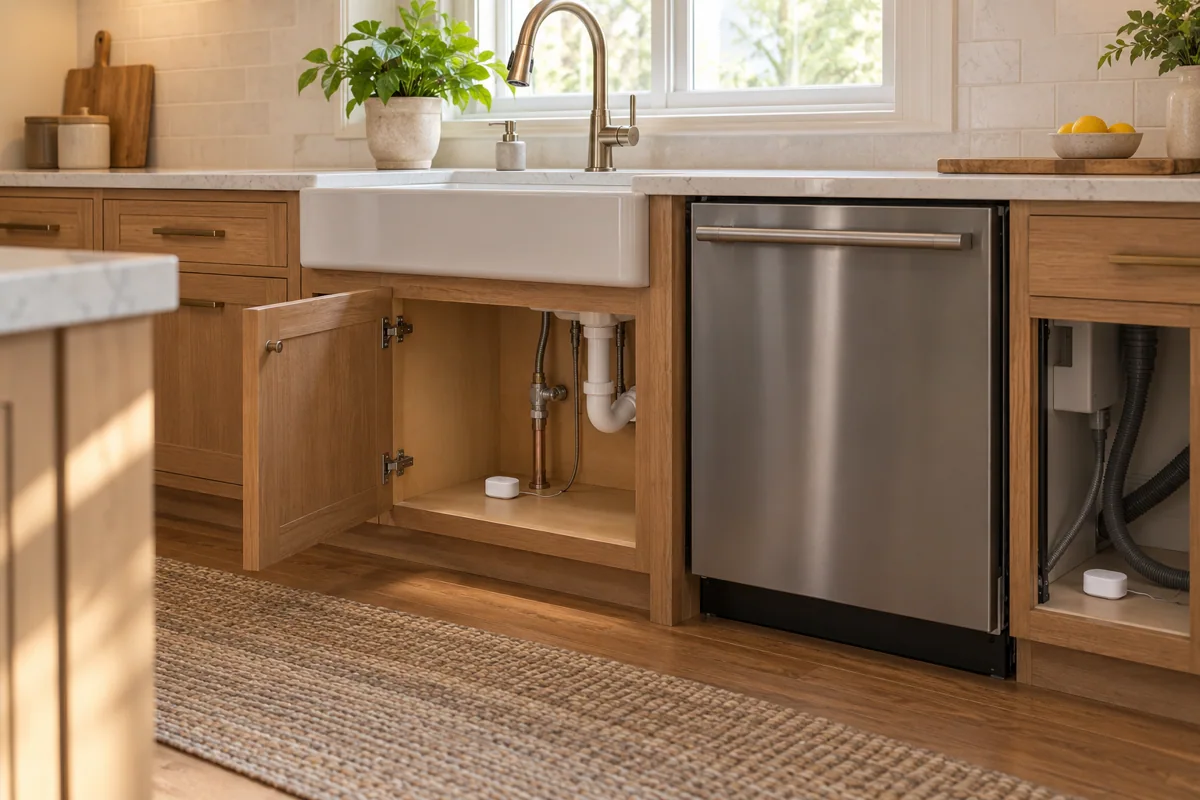
Choose a real collection point
Look at the trap, supply connections and cabinet floor. Avoid a position routinely splashed during cleaning if it creates nuisance alerts, but do not bury the sensor beneath stored items that prevent inspection or battery replacement.
Include the notification path
For example, Tapo T300 uses a required hub. Check the selected sensor’s own controller requirement and how a notification reaches the resident; a sensor alone does not create an attended response plan.
Ask for a named point
Request a small kitchen list with each location named in plain language. Test an alert at the final position, record who responds, and keep a simple periodic check rather than assuming an installed device needs no attention.
Before you buy
- Photograph the cabinet floor
- Confirm the required hub
- Name the alert recipient