
Meeting-room smart lighting: make presentation mode explicit
For a small meeting-room concept, distinguish discussion lighting from presentation lighting before choosing controls. A scene should improve visibility around the screen while leaving people able to move and take notes; it should not simply dim every circuit to the same level.
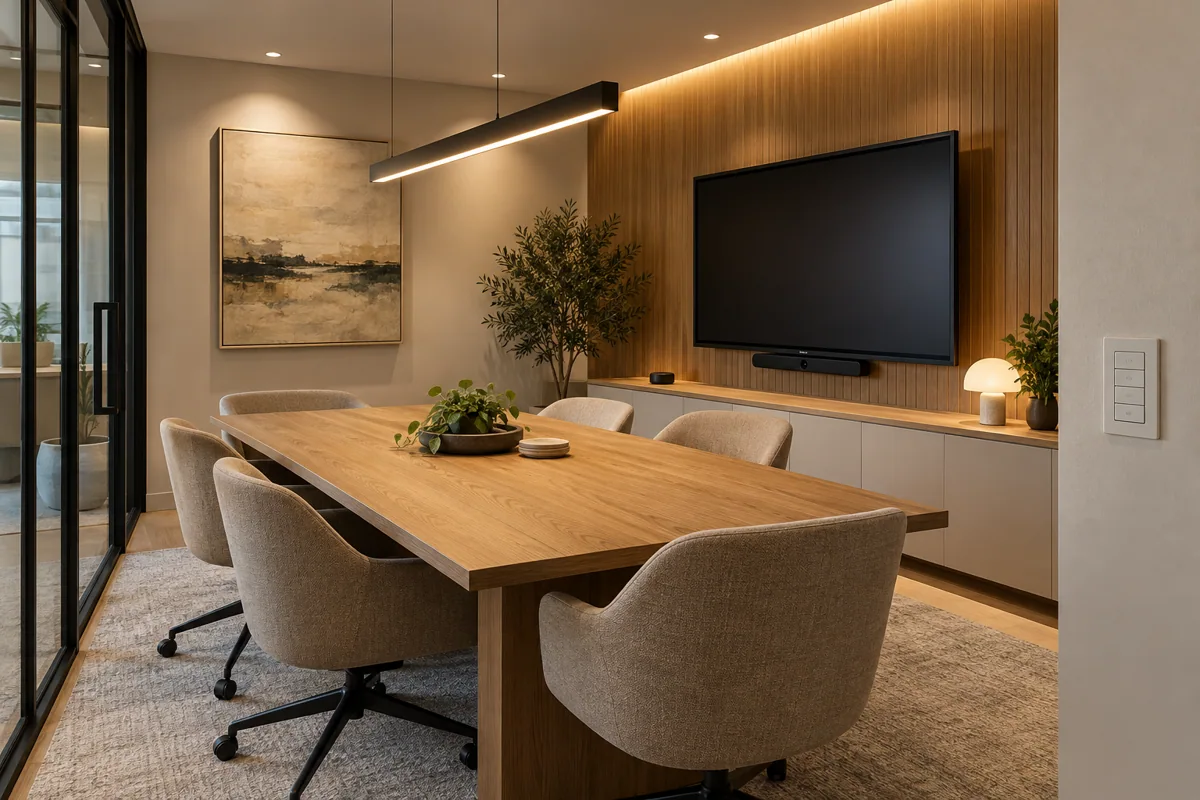
Check the room in use
Place a person at the table and show content on the actual display. Glare, facial light for calls and the path to the door can point to separate lighting groups even in a room that looks small on plan.
Keep controls recognizable
Use a small number of clear actions on an accessible controller. Keep lighting commands separate from unrelated AV power, and review any cross-system scene using the exact interfaces rather than assuming all connected equipment accepts the same commands.
Request a pilot room scope
Ask for one room’s reviewed load and control specification before repeating it across an office. Commercial installation and building requirements need the appropriate professional review, even when the demonstration uses familiar residential devices.
Before you buy
- Test the real display
- Keep a clear exit route
- Review commercial requirements