
A hallway light should allow for a pause
A hallway scene is more useful when it accounts for coats, bags and pauses at doors. Choose sensor placement and an off-delay around the real route, rather than buying the largest coverage claim and hoping a quick timeout will suit everyone.
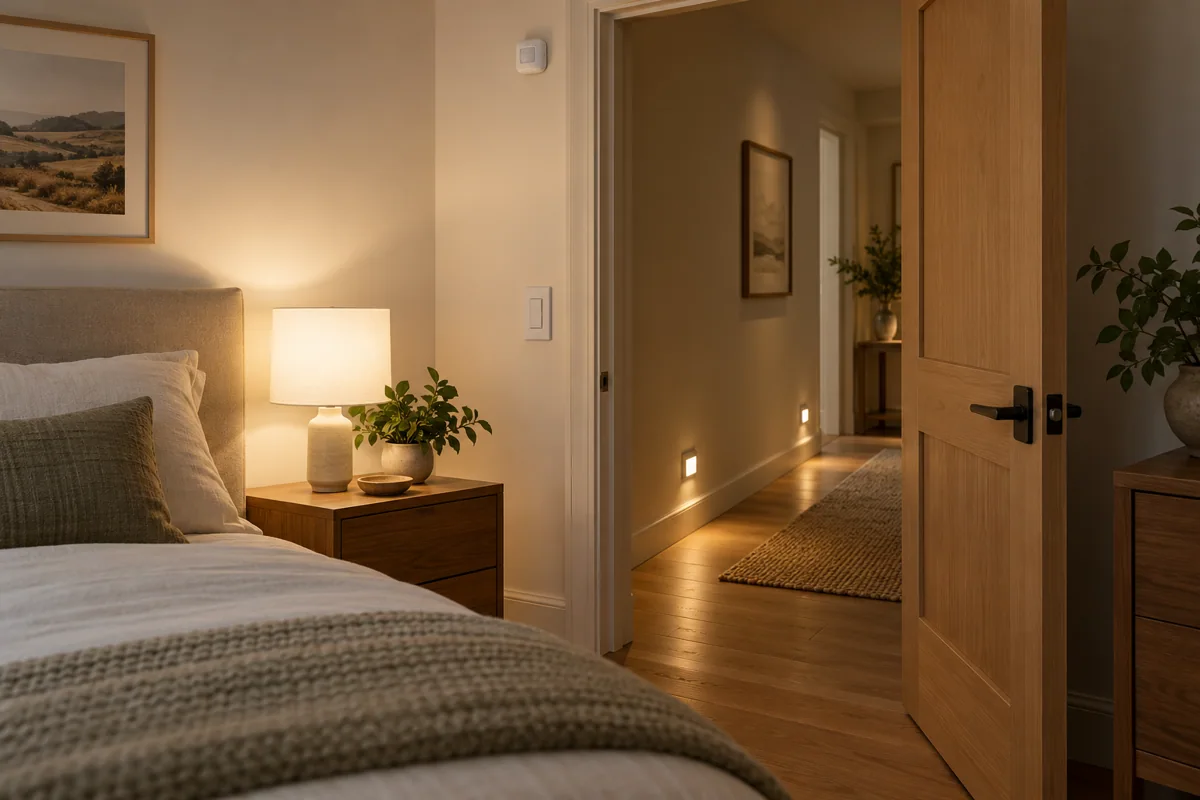
Walk the slow version
Try the route while carrying an ordinary load or stopping to open a room. A demonstration that only involves a fast walk-through can miss the moments when the light would switch off just as someone needs it most.
Keep the detection area focused
Check whether movement in nearby rooms should trigger the hall. A carefully chosen position can reduce nuisance operation, and a reachable switch should remain available for visitors or a day when automatic behavior is not wanted.
Ask for a route-based trial
Request one reviewed corridor branch with a clear time setting and manual action. Add other passages after testing their own layouts instead of assuming one successful sensor position can be repeated unchanged around the home.
Before you buy
- Test normal pauses
- Check neighboring movement
- Retain a local switch