
Selling a Phased Smart‑Home Plan: Making Phase One Feel Complete
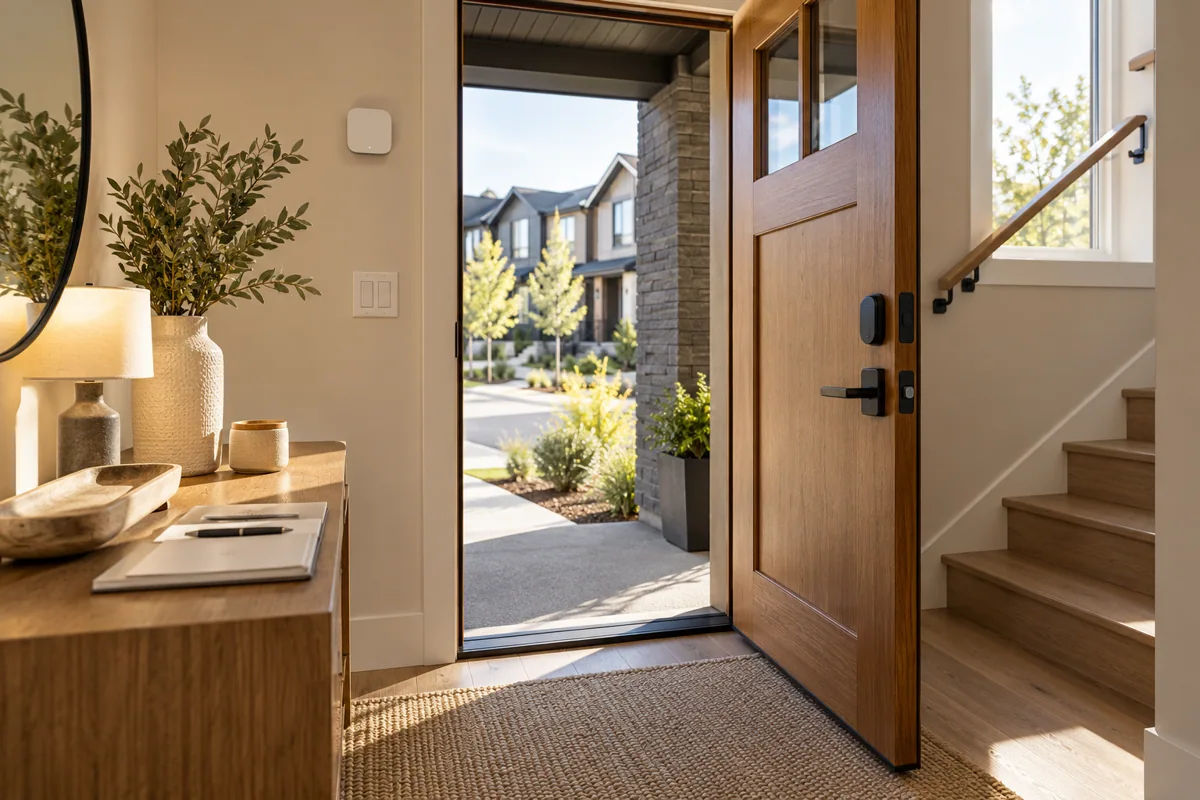
A realistic first step
Imagine a family that wants a connected home but can only budget for one weekend of work. The safest promise you can make is that everything installed in that weekend will already improve daily life – security, comfort, or energy use – without requiring the next set of devices to function.
What phase‑one must deliver on its own
- Secure entry – a smart lock (or a retrofit deadbolt with a keypad) that can be operated by a phone app, a code, or a physical key. The lock should retain a traditional key as a fallback, so the home never feels exposed after the first visit.
- Basic climate control – a Wi‑Fi thermostat that learns the family’s schedule and can be adjusted from any smartphone. Even if later you add room‑by‑room sensors, the thermostat alone should already cut heating or cooling bills.
- Visible convenience – at least one programmable scene, such as “Good Night” that locks the door, lowers the thermostat, and turns off main lights. The scene proves the system works and gives the homeowner an instant win.
If those three outcomes are in place, you can confidently say the first phase is a complete product, not a half‑finished skeleton.
Conditional buying judgement
Buy phase one only when the homeowner wants immediate, measurable benefits – for example, they have been worried about leaving the door unlocked or their energy bill is high. In that case, the lock‑plus‑thermostat combo satisfies a real pain point and creates goodwill for future add‑ons.
Alternative path – if the client’s main driver is future‑proofing (they love the idea of a fully integrated voice‑assistant ecosystem but have no urgent need for a lock or thermostat), you might start with a central hub and wiring. The downside is the home will feel “empty” until the next devices arrive, which can erode trust. In such cases, pair the hub with a low‑cost, stand‑alone device – a smart plug or a single motion sensor – just to give the homeowner a tangible benefit right away.
Practical responsibilities
Both you and the customer should agree on a hand‑over checklist that includes:
- A short demo of each installed function, recorded on the homeowner’s phone.
- Documentation of how to replace batteries, reset the lock, and adjust thermostat schedules without a technician.
- A clear timeline and price estimate for the next phase, plus a note that the first‑phase devices will work independently of any future hardware.
When those expectations are written down and demonstrated, the homeowner walks away feeling that phase one is a finished solution, and you keep the door open for the next upgrade.
真实的第一期
想象一家人想要智能家居,但只能一次性投入一个周末的预算。最安全的承诺是:这一个周末完成的所有装置已经能提升日常生活——安全、舒适或节能——而不依赖后续设备才能工作。
第一期必须独立实现的效果
- 安全入口——智能锁(或带键盘的改装死锁),可以通过手机、密码或实体钥匙打开。保留传统钥匙作为后备,让屋主在第一期结束后不感到门不安全。
- 基础空调控制——支持 Wi‑Fi 的恒温器,能够学习家庭作息并通过手机随时调节。即使以后再加房间传感器,单独的恒温器已经能降低暖气或空调费用。
- 直观便利——至少一个预设场景,例如“晚安”,自动锁门、调低温度并关闭主要灯光。场景的即时效果证明系统可用,也让屋主立刻感受到价值。
只要这三项功能完整可用,就可以明确告诉客户:第一期是一个 完整的产品,而不是半成品。
条件性购买判断
当屋主有迫切、可量化的需求时才购买第一期——比如担心门锁安全或能源账单过高,此时锁+恒温器的组合能够立刻缓解痛点,并为后续升级赢得信任。
另一种思路——如果客户更看重未来的整体生态(想要完整的语音助理系统),但当前并无紧急需求,可先铺设中心枢纽和布线。但仅靠枢纽会让家里显得“空荡”,容易产生失望。此时可以再加一个低价的独立设备,如智能插座或单一运动传感器,让屋主在第一期就能看到实际收益。
实际责任分配
双方应事先约定交付清单:
- 对每项已装功能进行现场演示,并让屋主用手机录制短视频。
- 提供更换电池、复位锁具、修改恒温器计划的简易说明。
- 给出下一阶段的时间表与费用预估,并注明第一期设备可以独立工作,无需后续硬件配合。
只要这些约定得到落实,屋主会觉得第一期已经完整交付,而你也为后续的升级保持了信任与空间。