
When Opening a Window Should Trigger a Prompt, Not an Unplanned HVAC Override
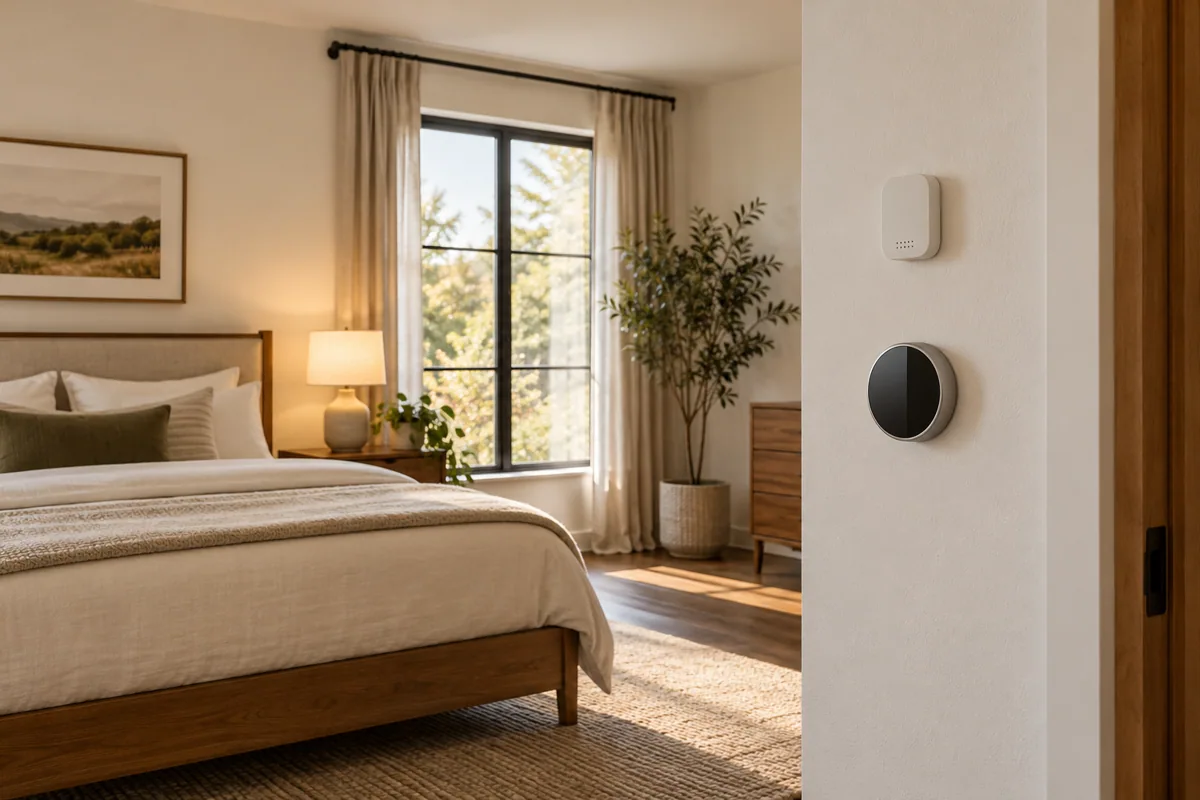
A typical morning
Anna lives in a two‑storey house in Toronto. At 7 am she slides the living‑room window open for fresh air. A nearby Aqara Temperature & Humidity Sensor (paired with a Hub M3) reports a 2 °C drop within a minute. The ecobee Smart Thermostat Premium sees the temperature dip and, if left unchecked, would boost the furnace to chase the setpoint – a classic “window‑open override.”
Three possible scopes
- Information only – The sensor sends a push notification: “Window opened, temperature falling 2 °C.” No thermostat action occurs.
- Suggestion – ecobee displays a banner on its app and on the thermostat screen: “Window open – consider lowering the heat setpoint by 2 °F.” The homeowner can tap to apply the change.
- Authorized climate action – The thermostat automatically reduces the heating setpoint or switches to “hold off” mode until the window closes.
Why the trade‑off matters
- The Premium thermostat can accept occupancy data from ecobee SmartSensor, but it cannot safely issue rapid on/off cycles without the installer confirming furnace lock‑out timing and minimum‑run requirements.
- An automatic override may waste energy and shorten equipment life if the window stays open for an extended period.
Conditional buying judgement
- If you already have an ecobee thermostat plus a SmartSensor in the same zone, configure the system for Suggestion mode. This leverages the thermostat’s built‑in “Window Open” detection while keeping the final setpoint change in the homeowner’s hands. Ask your installer to verify that the HVAC’s minimum‑off interval (often 5‑10 min) won’t be violated by frequent window events.
- If you lack a SmartSensor or want a simpler solution, use the Aqara sensor solely for notifications. The homeowner manually adjusts the thermostat, avoiding any mechanical‑safety concerns.
Responsibility checklist
- Homeowner: defines the comfort policy (e.g., “lower heat by 2 °F when a window is open”).
- Installer: confirms that any automatic setpoint change respects furnace lock‑out and blower cycle limits, and documents the approved control path.
- System: should expose the chosen scope in the app so the user can see whether the action is informational, suggestive, or authorized.
Ready to tailor the room‑comfort kit for your home? Request a quote and let the installer set the safe control boundaries before you automate.
一个典型的早晨
Anna 住在多伦多的两层住宅。早上 7 点她打开客厅的窗户通风,窗边的 Aqara 温湿度传感器(通过 Hub M3 连接)在一分钟内报告温度下降约 2 °C。与此同时 ecobee Smart Thermostat Premium 检测到温度下滑,若不加限制会立即提升暖气功率——这就是常见的“开窗覆盖”。
三种可能的处理范围
- 仅提供信息 – 传感器推送通知:“窗户已打开,温度下降 2 °C”。 暖通系统不做任何动作。
- 提供建议 – ecobee 在应用和显示屏上出现横幅:“窗户打开,建议将暖气设定点下调 2 °F”。 用户可点击确认修改。
- 经授权的气候动作 – 暖通系统自动降低设定点或进入“暂停供暖”模式,直至窗户关闭。
权衡原因
- Premium 型号能够接收 ecobee SmartSensor 的占用数据,但若要实现快速的开/关循环,必须让安装人员确认炉子的锁定时间和最小运行间隔,否则会导致能耗浪费并缩短设备寿命。
- 自动覆盖在窗户长时间打开时会造成不必要的加热,违背节能初衷。
条件性选购判断
- 已有 ecobee 暖通主机并在同一区域配备 SmartSensor 时,建议使用 提供建议 模式。这样利用了 thermostat 内置的“窗户打开”检测,同时把最终的设定点改动留给居住者。请让安装人员核实暖通系统的最小停机时间(通常 5‑10 分钟),确保频繁的窗户事件不会触发违规循环。
- 若没有 SmartSensor 或希望保持最简方案,仅使用 Aqara 传感器发送通知,由居住者手动调节 thermostat,避免任何机械安全风险。
责任清单
- 居住者:明确舒适策略(例如“窗户打开时下调 2 °F”。)
- 安装人员:确认任何自动设定点变化不会违反炉子锁定或风机循环限制,并记录已批准的控制路径。
- 系统:在应用中清晰显示所选范围是信息、建议还是授权动作,便于用户辨识。
想为您的住宅打造合适的舒适套件吗?获取报价,并让安装人员在实际系统上确认安全的控制路径后再开启自动化。